Why You're Not Getting Hired in 2026 (And What Actually Works)
If you've sent out fifty applications and heard back from three, you are not doing anything wrong. The job market itself has quietly become a much harder place to be heard in — and most of the advice out there hasn't caught up. Here's what's actually happening, backed by real 2026 data, and what genuinely helps.
Published: September 24, 2026 · Written by the Resume Minter team
In this article
1. You're not competing against a few people. You're competing against 242.
The average job posting now receives 242 applications — more than double what it was five years ago. LinkedIn alone processes around 11,000 applications every minute. The math works out to roughly a 0.4% chance of landing any single role you apply to.
Why the sudden flood? AI. Around three in four job seekers now use some form of AI to apply, and nearly half admit they're applying to extra roles specifically to try to beat automated filters. Everyone is applying to more jobs to compensate for everyone else applying to more jobs — which is exactly why it keeps getting worse.
What actually helps: stop trying to out-volume everyone else. A handful of applications that are genuinely tailored to the job description will beat fifty identical ones sent everywhere. Before you apply, check how well your resume actually matches that specific posting — not just "does it look professional," but does it use the language and skills that posting is actually asking for.
2. Recruiters don't fully trust resumes anymore — including honest ones
91% of hiring managers say they've detected or suspected AI-fabricated claims on resumes. 67% say AI-generated applications are actively slowing down their hiring process. The result is a trust problem that doesn't distinguish between someone who used AI to lie and someone who used it to format a bullet point — everyone's application gets read a little more skeptically now.
What actually helps: make your claims easy to verify, not just easy to read. If you built something, link to it. If you have a certificate, name it specifically. A resume a recruiter can quickly verify stands out precisely because so few can be verified at all right now.
3. A third of the jobs you're applying to might not even be real
Estimates vary, but somewhere between one in five and one in three job postings are "ghost jobs" — listed with no real intention to hire anytime soon. Companies post them to build a candidate pipeline for later, to look like they're growing, or just to hold a budget line open. The average job seeker spends about 9 hours per application cycle. A lot of that time is being spent on roles that were never going to be filled.
What actually helps: before you invest hours tailoring an application, do a quick sanity check — does this exact posting also appear on the company's own careers page, and how long has it been up? A listing that's only ever existed on a job board and has sat there for months is worth being skeptical of.
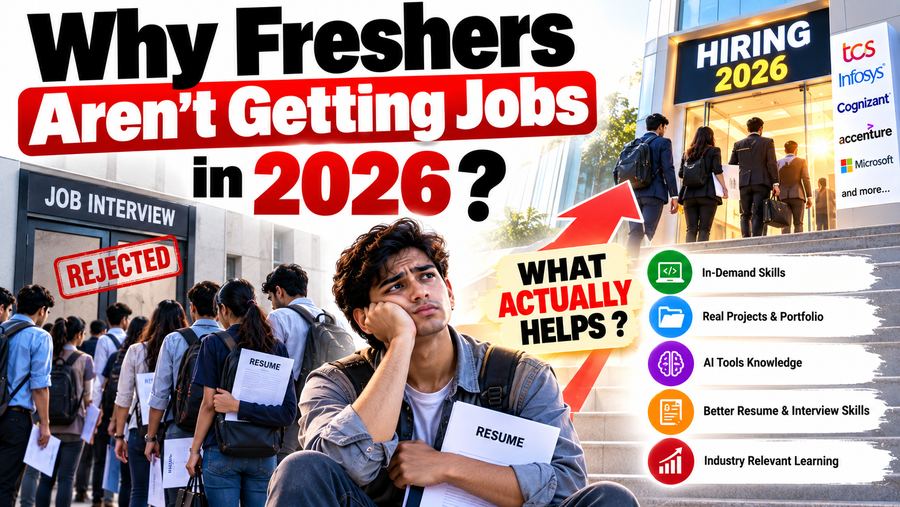
4. If you're a fresher, you're being squeezed from both directions
Entry-level hiring in Indian IT services has been cut by an estimated 20–25% as automation absorbs the routine work freshers used to start on. At the same time, a fresh graduate represents months of training investment before they're useful on a real project — which makes companies more cautious about hiring them when margins are tight. Layer on top of that a skills mismatch: recruiters say they can't find candidates with the AI, cloud, and data skills they're actually hiring for, while many resumes still look generic and interchangeable.
What actually helps: the fix usually isn't a better-looking resume — it's showing you can do something specific. One real project, described with what you actually built and what it actually did, will do more for you than five vague bullet points and a stack of certificate names nobody asked for.
5. The silence is the hardest part
72% of job seekers say the hiring process has had a real negative effect on their mental health, and the number one complaint isn't rejection — it's silence. No feedback, no closure, just nothing.
If that's where you are right now: the numbers above aren't a reflection of you. Most people apply to twenty or thirty roles before something lands. The process is genuinely harder than it used to be, for reasons that have nothing to do with how good you are.
Where Resume Minter fits in
We built our free ATS score checker around the problems above, not around making your resume "look nicer." Check your match against a specific job description before you spend an hour tailoring for it. Build something that actually shows what you did, not just what you're hoping someone believes.
Keep reading
Check your resume against a real job description
Free ATS score checker — see your match score and missing keywords before you apply, no signup required.
Check my ATS score Build my resumeSources: Resume Genius 2026 Job Search Statistics Report, Forbes (March 2026) on AI resumes and hiring manager sentiment, ghost job prevalence data from Ashby ATS and employer surveys, and reporting on India's fresher hiring market from TAP Academy.